Circular Economy Solutions
Turning waste streams into productive material cycles.
Enviol develops chemical and material pathways that help recover value from polymer waste and return it to industrial use.
From Linear to Circular
The objective is simple: keep useful molecules and materials productive for longer instead of losing them at end-of-use.
Linear model
Circular model
The Challenge Is Material Loss
Waste becomes an economic problem when valuable material exits the productive supply chain.
Mixed waste
Different materials can be difficult to separate.
Material degradation
Repeated processing may reduce usable quality.
Virgin dependence
Manufacturers continue to depend on new feedstocks.
Supply-chain exposure
Imported materials can add cost, lead time and risk.
From Waste Stream to Industrial Feedstock
Enviol connects waste characterisation, chemical recovery and application development into one material pathway.
Circular Materials We Work With
Our current focus is on polymer streams where chemical regeneration can create useful industrial feedstocks.
PET waste
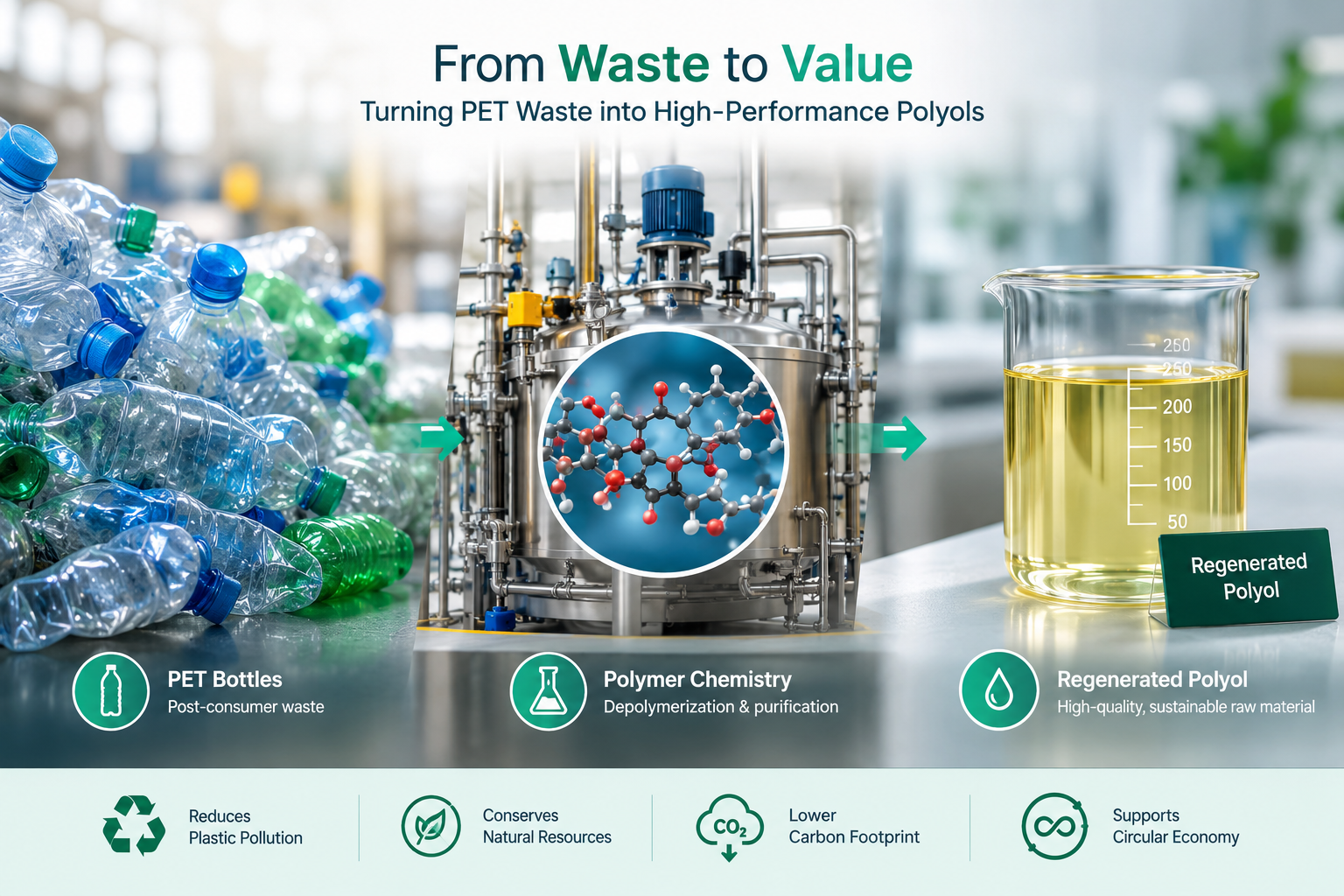
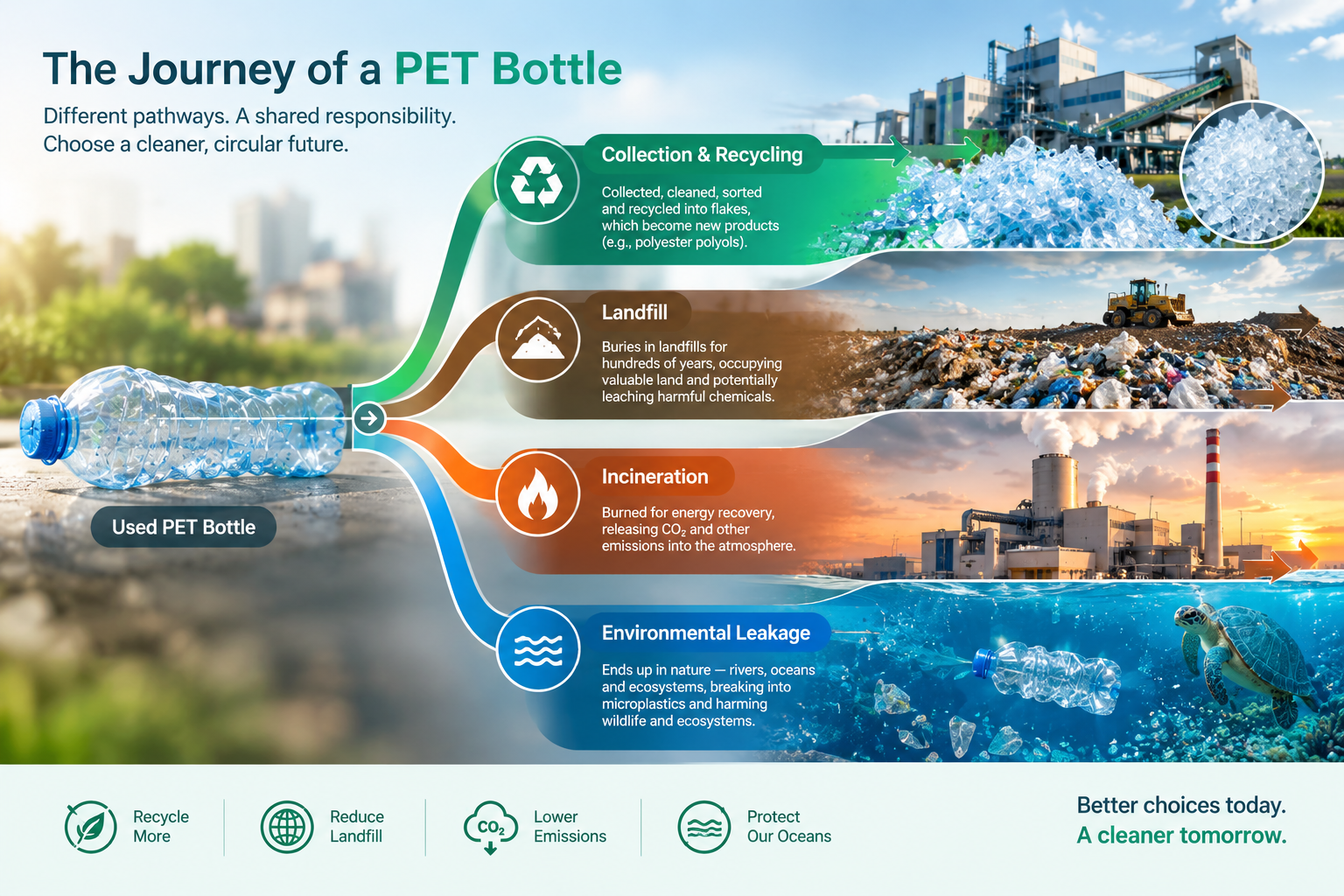
PET waste can become a chemical feedstock for regenerated polyester polyols and related material systems.
PU waste
Selected polyurethane waste streams can be investigated for recovery and regeneration opportunities.
Polyester streams
Industrial polyester residues can offer additional opportunities for chemical recovery and reuse.
Regenerated Polyols as Circular Building Blocks
A regenerated polyol becomes valuable when it can replace part of the conventional material used in a real formulation.
waste
regeneration
polyol
Designing the Material Loop
Circularity becomes stronger when the next application is considered at the same time as the recovery route.
Circularity Can Strengthen Supply Chains
Local material loops can complement conventional supply chains and reduce dependence on a single feedstock source.
Conventional route
Circular route
Circularity Without Compromising Performance
Sustainable material only creates lasting value when it works inside the customer's process.
OH value
Controls chemical functionality
Viscosity
Supports processing behaviour
Acid value
Important for formulation quality
Functionality
Influences polymer structure
Moisture
Critical for PU processing
Colour
Important for appearance-sensitive systems
Compatibility
Must work with the customer's system
Application test
Final proof of suitability
Where Circular Materials Create Value
The same regenerated material can support multiple downstream applications when its chemistry is appropriately designed.
| Material stream | Regenerated material | Potential application |
|---|---|---|
| PET waste | Polyester polyol | PU foam / PIR |
| PET waste | Polyester polyol | Coatings |
| PET waste | Polyester polyol | Adhesives & sealants |
| Polyester waste | Regenerated intermediates | Specialty formulations |
| Selected PU waste | Recovered polyol | PU development |
What Makes a Material Truly Circular?
Circularity should be evaluated across environmental, technical and economic dimensions—not by recycled content alone.
Material
Technical
Economic
Circularity Has to Make Economic Sense
A technically possible recycling route becomes commercially meaningful only when the complete economics work.
Enviol's Role in the Value Chain
Enviol sits at the point where recovered chemistry needs to become a reliable industrial material.
Circularity Requires a Network
Closing material loops requires collaboration across the entire value chain.
Expanding the Circular Material Platform
Enviol's circular-material strategy can expand progressively as chemistry, applications and production scale mature.
Establish
- • PET-based regenerated polyols
- • Waste-stream R&D
- • Application development
Expand
- • More feedstock formulations
- • Higher recycled content
- • Customer qualification
Scale
- • Broader polymer streams
- • Advanced recovery routes
- • Regional circular networks
Let's Build the Next Material Loop
Have a polymer waste stream that is difficult to reuse? Looking for recycled-content polyols? Enviol can work with partners to explore technically and commercially viable circular material pathways.