
Polyol Manufacturing Process
Polyols used in polyurethane systems are manufactured through controlled chemical reactions involving polyether or polyester synthesis routes depending on the desired end application.
The manufacturing process determines key properties such as molecular weight, functionality, viscosity, and final performance in coatings, insulation, and elastomer systems.
At Enviol, polyol development focuses on performance optimization for rigid foam, coatings, adhesives, and industrial polyurethane applications.
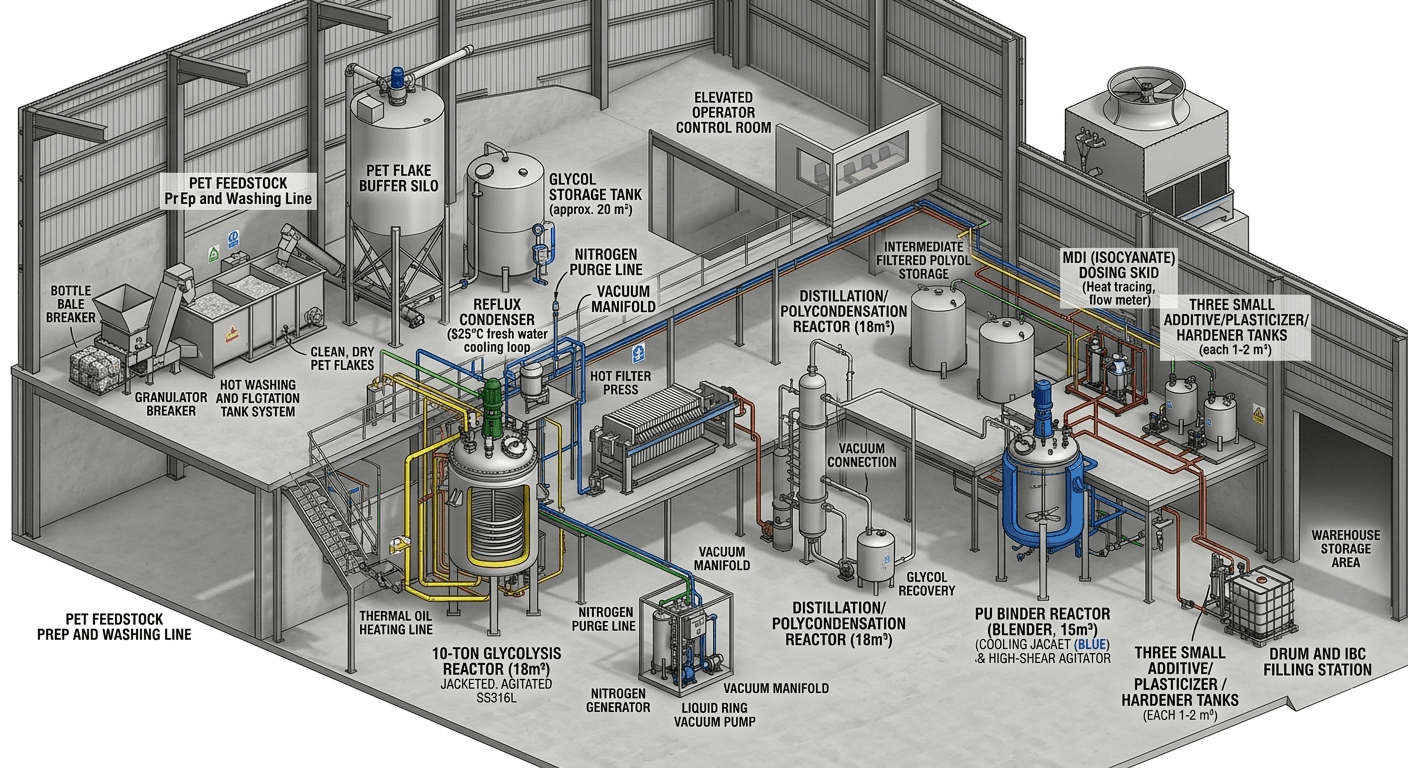
Polyester Polyol Manufacturing
Polyester polyols are produced through a polycondensation reaction between diacids (or anhydrides) and glycols under controlled temperature and vacuum conditions.
The process involves esterification, water removal, and molecular weight control to achieve desired hydroxyl functionality.
Key raw materials include: adipic acid, phthalic anhydride, ethylene glycol, diethylene glycol, and neopentyl glycol.
Polyether Polyol Manufacturing
Polyether polyols are manufactured via the polymerization of epoxides such as propylene oxide or ethylene oxide using initiator molecules.
The reaction is catalyzed using potassium hydroxide or double metal cyanide (DMC) catalysts depending on desired molecular precision.
This process allows control over molecular weight distribution, reactivity, and hydroxyl value.
Process Flow Overview
Raw Material Selection
Selection of glycols, acids, and initiators based on target application.
Reaction Control
Temperature, pressure, and catalyst control for polymer formation.
Molecular Adjustment
Adjustment of hydroxyl value, viscosity, and functionality.
Filtration & Finishing
Removal of impurities and final product stabilization.
Quality Control & Testing
Each polyol batch is tested for hydroxyl value, viscosity, acid number, water content, and molecular consistency.
These parameters ensure consistent performance in polyurethane systems across insulation, coatings, and elastomers.
Sustainable Manufacturing Approach
Modern polyol manufacturing is shifting toward bio-based feedstocks and energy-efficient production systems.
Enviol focuses on developing sustainable polyol systems derived from recycled and renewable raw materials.